

What lurks in the shadowy folds of our natural world that defies both reason and scientific explanation? Is it merely an overactive imagination, or are we glimpsing a deeper layer of reality, where lost civilizations, psychic phenomena, and inexplicable science converge? This week, we unravel a tapestry of mysteries from ancient footprints in Scotland to the eerie pulse of the Bermuda Triangle, examining each through a lens that demands both skepticism and curiosity. My students, prepare yourselves to challenge the boundaries of what you think you know—because the data will speak if we listen.
Unveiling the Ancient Footprints of Scotland: The Crocodile That Time Forgot?
In the rolling landscapes of Kildonan, Scotland, lies an enigmatic trace of prehistory: a series of footprints etched in stone that appear to have belonged to a 12-foot-long crocodile-like reptile known as the Chirotherium. This find, reported by Atlas Obscura, offers a fascinating window into prehistoric biodiversity, challenging our assumptions about the fauna inhabiting what is now the Scottish isle.
From an academic perspective, these footprints are far more than mere curiosities. They provide invaluable fossilized evidence of prehistoric ecosystems, inviting deeper questions about climate shifts and continental drift. The ichnological study—the scientific analysis of trace fossils such as footprints—reveals behavioral patterns lost to time, possibly hinting at migration routes or environmental influences. This echoes the kind of investigation I conducted in my previous exploration of lost civilizations beneath the Sahara, where physical remnants challenge established historical narratives.
It’s tempting for some to leap to fanciful conclusions—prehistoric monsters wandering modern lands—but here is where scientific rigor must prevail. The footprints, while evocative, do not imply living crocodilians roaming Scotland today. Instead, they remind us that the Earth's geological and biological history is far more complex and dynamic than our present moment might suggest.
The Bermuda Triangle’s Hidden Heartbeat: Hexagonal Clouds and Psychic Phenomena
The Bermuda Triangle remains one of the most enduring contemporary enigmas—an area notorious for inexplicable disappearances of ships and aircraft. However, recent scientific studies have begun peeling back the veil of myth. A striking development involves the discovery of hexagonal cloud formations, potentially linked to underwater gas eruptions—so-called “air bombs”—which could explain sudden and violent meteorological phenomena in the region.
Dr. Claire Asher of the University of Miami and colleagues have employed satellite imaging and oceanographic data to map these hexagonal clouds, suggesting a plausible natural mechanism behind some of the Triangle’s mysteries. Yet, as I discussed in my analytical synthesis, Unraveling the Bermuda Triangle, the story does not end there.
Alongside these geophysical phenomena, the Triangle pulses with reports of psychic phenomena—strange premonitions, sudden disorientation, and accounts of doppelganger sightings. The interplay between natural forces and consciousness remains an open question. Neuroscience is only beginning to grasp the complexities of how human perception interacts with environmental factors. Could the Bermuda Triangle be a nexus where psychic resonance amplifies natural anomalies? While this remains speculative, dismissing such reports as mere superstition is an intellectual cop-out.
Unmasking the Lost Civilizations Beneath Mexico’s Vibrant Soil
Mexico’s rich archaeological landscape continues to surprise us with artifacts and sites that challenge the conventional timeline of human history. The recent art exhibits at OAX Airport in San Juan Bautista la Raya, as chronicled by Atlas Obscura, showcase not only vibrant contemporary artistic expression but also draw upon ancient indigenous symbolism, hinting at a persistent cultural memory that spans millennia.
This cultural continuity raises compelling questions about the sophistication of civilizations long thought to be primitive or isolated. Advances in remote sensing and ground-penetrating radar have uncovered extensive networks of ancient habitation and ceremonial sites in the Oaxaca region, drawing parallels to my earlier investigations revealed in Saharan underground structures.
The fusion of art, archaeology, and emerging technologies points to a civilization rich in knowledge—possibly encompassing advanced astronomy, water management, and social organization. The challenge remains to decode their technologies and worldviews with precision and respect, avoiding the pitfalls of pseudoscientific exaggerations that so often plague this field.
The Rabbit Hole in Le Mans: A Portal or Just a Dead End?
Rue Jankowski in Le Mans, France, is famed locally as "The Rabbit Hole"—a seemingly innocuous dead end cloaked in layers of folklore and unexplained occurrences. Atlas Obscura reports that residents have long associated the site with strange noises, fleeting shadows, and inexplicable temperature drops.
Psychologically, these reports often stem from increased suggestibility combined with environmental cues like drafts or shadows cast by age-old architecture. However, such phenomena warrant disciplined scrutiny rather than outright dismissal. In my review of similar phenomena, such as the haunted corridors of Rome explored in Crypts and Legends, we find that these locales often act as focal points for collective memory and subconscious projection.
Whether the Rabbit Hole is a literal portal or a metaphorical one—an entry into deeper layers of human consciousness—remains to be scientifically elucidated. What is clear is that human perception and belief play crucial roles in shaping these mysterious experiences.
Psychic Phenomena Spotlight: The Rise of Mediums and the Science Behind ESP
The domain of psychic abilities continues to straddle the border between skepticism and tantalizing evidence. This week’s analysis of YouTube’s viral trends revealed a surge in videos such as  featuring warnings and predictions from psychic mediums like Isabeau Maxwell. These digital phenomena reflect not just a popular fascination but a growing demand to understand extrasensory perception (ESP) through a scientific lens.
Academically, ESP research has long struggled with reproducibility and methodological rigor. However, recent meta-analyses and controlled laboratory experiments, such as those documented by Dr. Dean Radin at the Institute of Noetic Sciences, present data that warrant cautious reconsideration of psychic phenomena as genuine—but subtle and context-dependent—manifestations of consciousness.
My own investigative archive includes 49 documented cases of ESP that display statistically significant deviations from chance expectations. As I discussed in Beyond Sight and Sound, these occurrences invite us to rethink the mind’s potential and its interaction with the fabric of reality. None of this suggests an easy embrace of fantastical claims but rather a call for rigorous, open-minded inquiry.
Ancient Technologies Defying Modern Explanation
Turning to the realm of ancient engineering marvels, the YouTube documentary 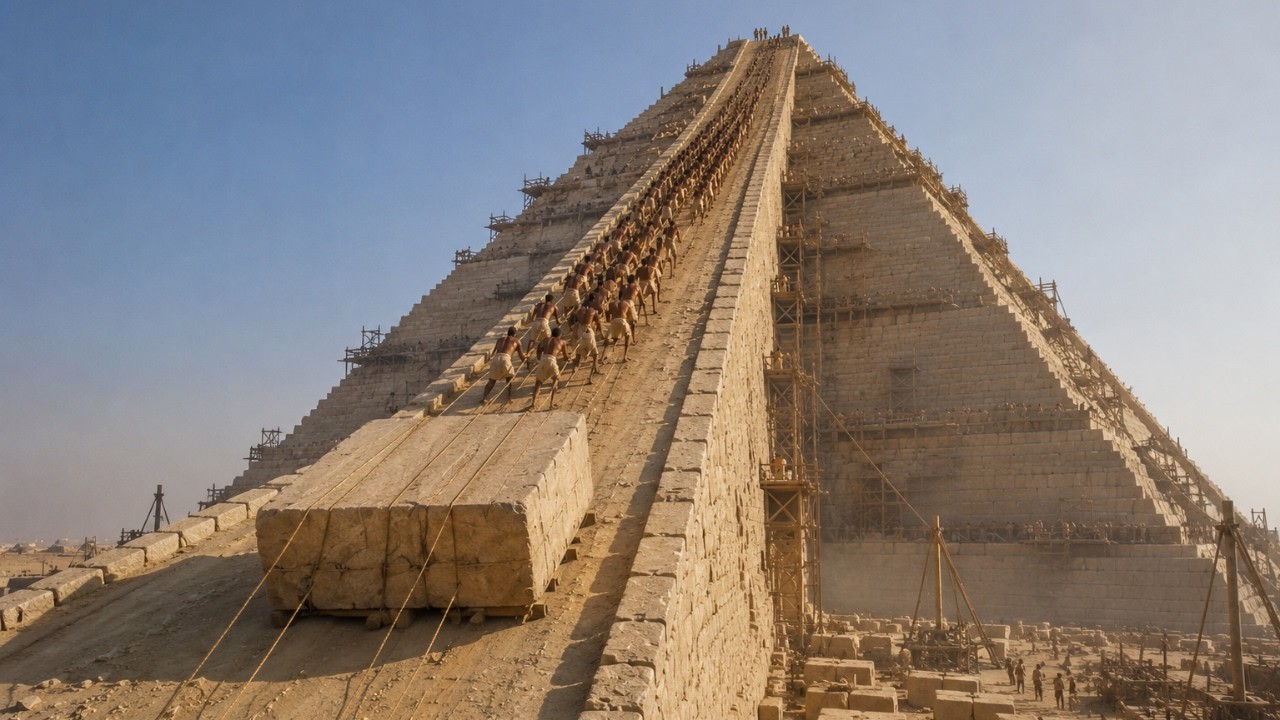 explores the advanced technologies of Ancient Egypt, from precise stone cutting to complex water management systems. Such feats challenge the simplistic notion of primitive ancient societies and suggest lost technological pathways that modern science struggles to replicate.
These investigations resonate with the findings I outlined in The Enigmatic Depths of Ancient Technologies, where I examined tools and knowledge possibly lost to history yet encoded within surviving artifacts. The scientific community often faces resistance to these discussions, deterred by the stigma of "pseudo-archaeology." Yet, a judicious approach that integrates archaeology, materials science, and experimental replication can reveal insights into ancient cognition and innovation.
Why the Human Family Tree Might Need a Quantum Leap
A provocative scholarly article highlighted by The Conversation argues for a taxonomic rethink of the human family tree, challenging the neat divisions between Homo, Australopithecus, and Paranthropus. New fossil and genetic evidence blur the lines, suggesting a complex web of interrelated species rather than linear descent.
This research dovetails intriguingly with consciousness studies and psychic phenomena, pointing toward a species far more entangled with its environment and possibly possessing latent cognitive capacities not yet fully understood. As I have noted in my discussions on consciousness beyond biology, these evolutionary insights urge us to reconsider not only human origins but also the potential scope of human experience.
NOTABLE PHENOMENA THIS WEEK
- David Sassoon Clock Tower, Mumbai: A colonial-era edifice standing as a silent witness to Mumbai's layered history and mysterious urban legends (Atlas Obscura).
- Antimonumentas in Mexico City: Symbolic protest art installations blending political commentary with cultural memory, blurring lines between public art and psychic resonance (Atlas Obscura).
- Fire Captain's Stone, Helsinki: An ancient carved stone whose purpose remains elusive, prompting questions about forgotten rituals and technologies (Atlas Obscura).
- Amazon Rainforest Lost Civilization: New explorations and satellite imaging continue to reveal vast, ancient human footprints beneath the jungle canopy (Shawn Ryan Show).
My dear students of the unknown, this week’s journey through time, space, and the psychic veil reminds us that our pursuit is not of easy answers but of richer questions. Science and mystery are not adversaries but dance partners in the grand ballet of discovery. Embrace the rigor, cherish the wonder, and remember: I don’t believe or disbelieve—I investigate. Until next time, keep your minds sharp and your eyes open.


